
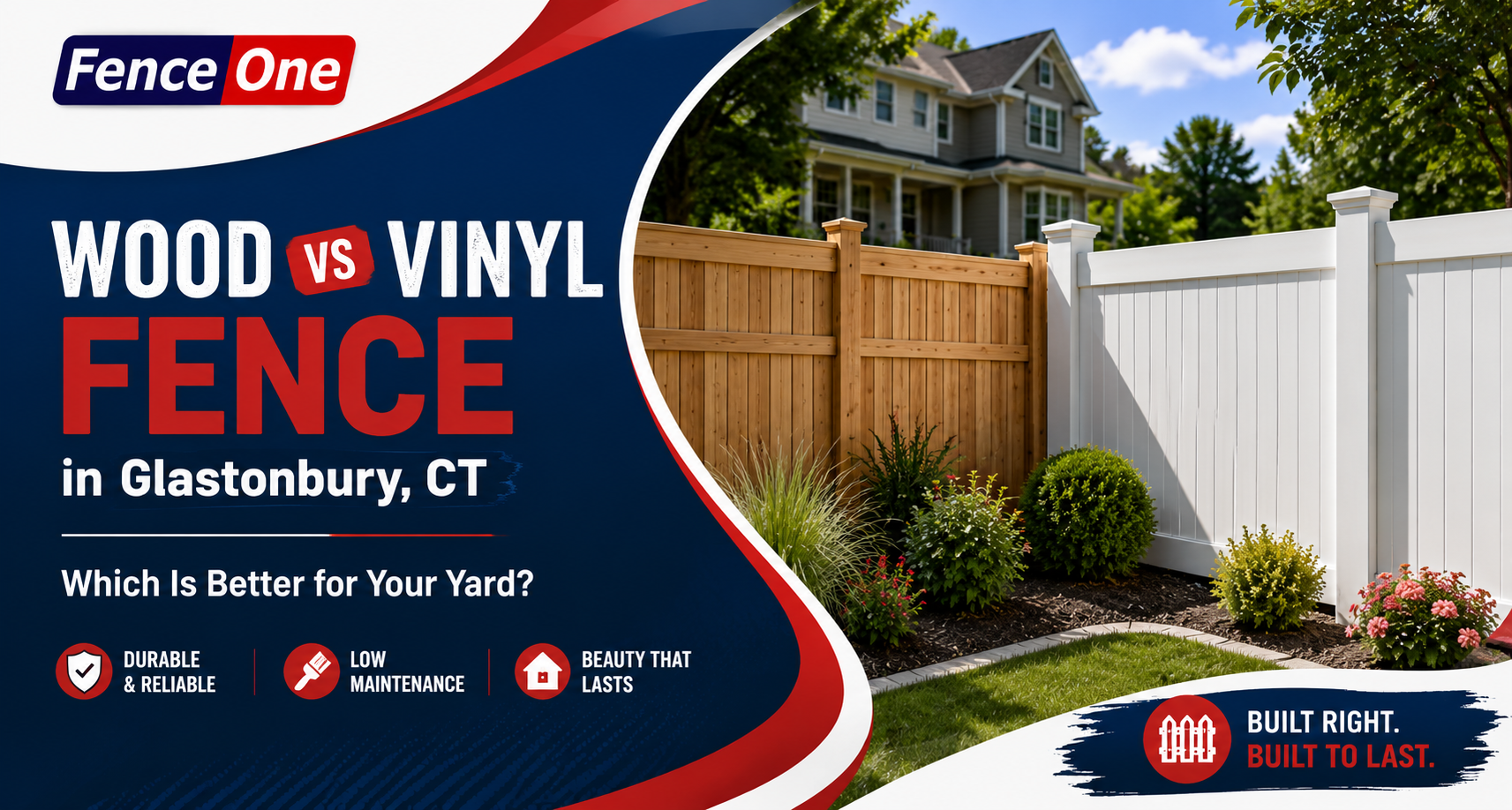
Choosing a new fence may seem simple until you start comparing materials. For homeowners in Glastonbury, CT, two of the most popular choices are wood and vinyl. Both can provide privacy, security, curb appeal, and a clear boundary around your property, but they have different advantages when it comes to maintenance, appearance, durability, and long-term value.
Understanding these differences can help you choose a fence that works for your home, lifestyle, and yard rather than simply selecting one based on appearance.
Why Does Fence Material Matter?
A fence is a long-term part of your property. It may need to handle rain, snow, summer heat, changing temperatures, and everyday wear. The right material should fit both your practical needs and the style of your home.
Before choosing a material, think about why you need a fence. Are you looking for more privacy? Do you want a safer backyard for children or pets? Are you mainly trying to improve curb appeal? Companies such as Fence One offer different fencing options, making it easier for homeowners to compare materials based on their specific needs.
What Are the Advantages of a Wood Fence?
Wood remains a popular fencing material because of its natural and traditional appearance. It can work especially well around homes with classic architecture, wooded properties, gardens, and natural landscaping.
One major benefit of wood is flexibility in design. Homeowners can choose different heights, styles, stains, and paint colors. A wood fence can also be customized to create anything from an open decorative boundary to a solid privacy fence.
For homeowners considering Custom fence installation in Glastonbury, wood can be attractive when a personalized look is an important part of the project.
What Should You Know About Wood Fence Maintenance?
The natural beauty of wood comes with some maintenance. Because wood is exposed to moisture and changing weather, it may eventually experience fading, cracking, warping, or deterioration if it is not properly maintained.
Depending on the type of wood and its condition, homeowners may need to stain, seal, or paint the fence periodically. Individual boards may also require repairs over time.
This does not necessarily make wood a poor choice. It simply means homeowners should be comfortable with ongoing care if they want to maintain the fence’s appearance and condition.
Why Do Homeowners Choose Vinyl Fencing?
Vinyl fencing is popular with homeowners who want a clean appearance with relatively little routine maintenance. It is available in privacy, semi-privacy, picket, and decorative styles, making it suitable for many different types of properties.
Unlike wood, vinyl does not require regular staining or painting. Cleaning is generally straightforward, which can make it appealing to busy homeowners.
Vinyl also provides a consistent appearance. If you prefer a neat, uniform backyard design, it may fit your goals better than the natural variation found in wood.
Which Fence Handles Connecticut Weather Better?
Connecticut homes experience changing conditions throughout the year, including rain, snow, freezing temperatures, summer sun, and wind. These conditions should be considered when comparing fencing materials.
Wood can perform well when properly installed and maintained, but moisture and temperature changes may affect it over time. Vinyl does not rot like natural wood, but quality installation is still important to ensure the fence can handle local weather conditions.
The condition of your property also matters. Drainage, slopes, soil conditions, trees, and exposure to wind can all influence fence performance.
Which Is Better for Privacy?
Both wood and vinyl can provide excellent privacy. Solid wood panels create a traditional enclosed backyard, while vinyl privacy panels offer a clean and consistent barrier.
Think about how much privacy you actually need. A patio or pool area may require more screening than a front yard. You should also consider whether you want airflow and visibility or a completely enclosed space.
The best solution often depends more on fence design and height than on material alone.
What About Homes With Dogs?
Pet owners have additional factors to consider. A fence should help prevent dogs from jumping over, squeezing through, or finding weak points around gates and boundaries.
The dog’s size, behavior, and activity level should influence the fence style. A small calm dog may have very different fencing needs from a large dog that likes to jump or dig. Homeowners researching Pet fence installation near Ellington CT can also consider how fence height, spacing, gates, and material contribute to creating a safer outdoor space.
Wood vs Vinyl: Which Costs More?
Cost depends on several factors, including the size of the yard, fence height, style, site conditions, gates, material quality, and installation requirements.
Rather than comparing only the initial price, think about long-term ownership. Wood may require staining, sealing, painting, or repairs, while vinyl generally requires less routine maintenance. The best value is therefore not always the option with the lowest starting cost.
How Should You Make the Final Decision?
Choose wood if you value a natural appearance, customization, and traditional character and are comfortable with periodic maintenance. Consider vinyl if you prefer low maintenance, a consistent appearance, and simple cleaning.
Before deciding, walk around your property and think about privacy, pets, landscaping, gates, maintenance, and the overall appearance you want.
Final Thoughts
There is no single winner in the wood vs vinyl fence debate. The better choice depends on your property and priorities. For Glastonbury, CT homeowners, both materials can create an attractive, functional yard when the fence is properly planned and installed.
Taking time to compare appearance, maintenance, weather resistance, privacy, pets, and long-term costs can help you choose a fence you will be comfortable with for years to come.