
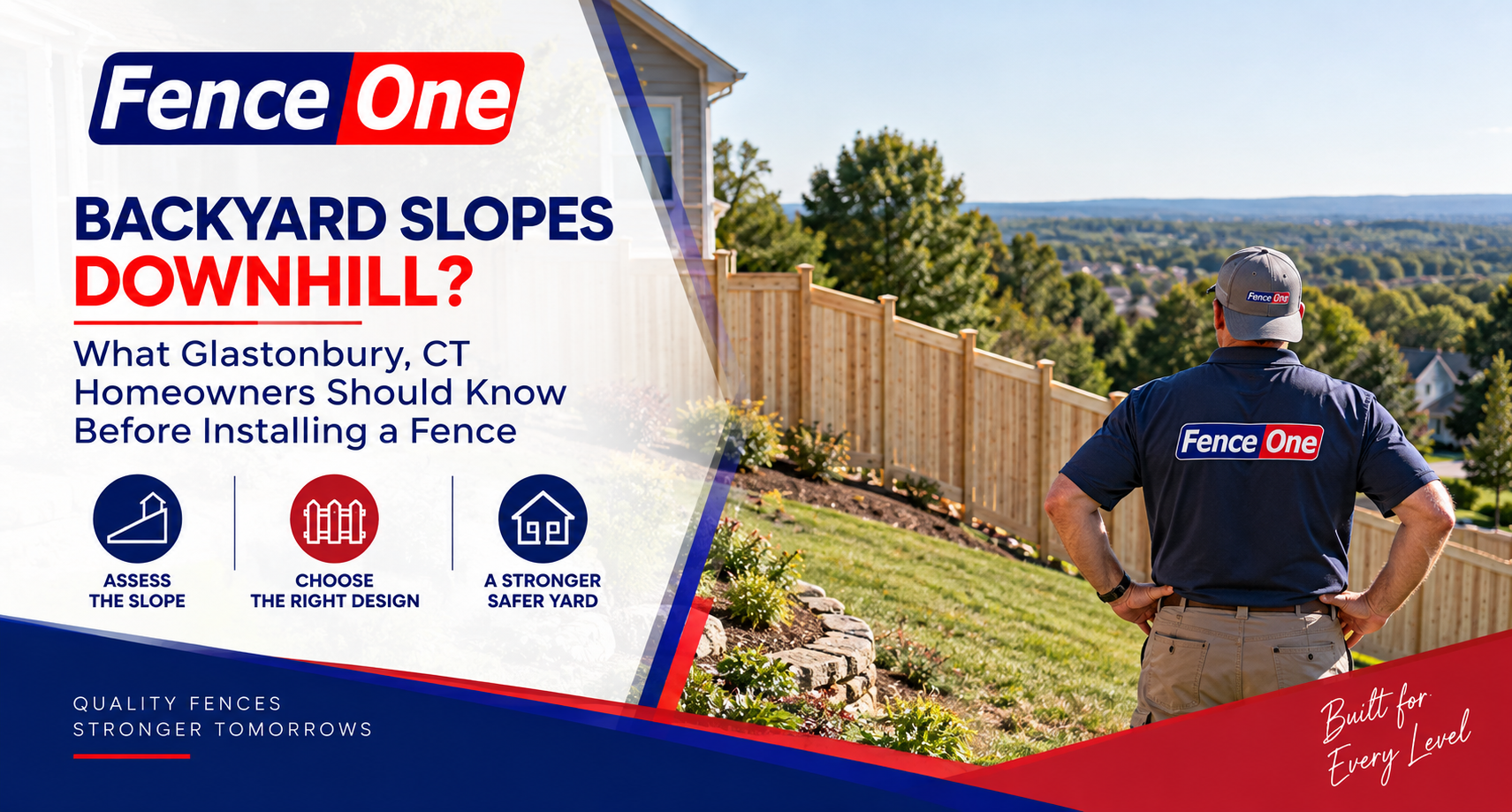
A sloped backyard can add character to a property, but it can also make fence installation more complicated than it first appears. A fence that looks perfect on a flat yard may develop noticeable gaps, uneven sections, or awkward gate placement when installed across changing ground levels.
For homeowners in Glastonbury, CT, understanding the slope before choosing a fence design is important. The goal is not simply to make the fence look straight. It should also provide the privacy, security, pet containment, and appearance you expect while working naturally with the shape of the property.
Why Does a Sloped Yard Change Fence Installation?
When the ground rises or falls, a standard level fence panel cannot always follow it without adjustments. If panels remain perfectly horizontal while the ground drops, spaces can develop underneath some sections.
Those gaps may not seem important at first, but they can affect privacy and security. They can also become a concern when the fence is intended to keep a dog safely inside the yard.
This is why companies such as Fence One consider factors such as terrain and property conditions when planning fencing rather than treating every yard exactly the same.
Understand Stepped and Grade-Following Fences
Two common approaches to sloped yards are stepped fencing and fencing that follows the grade.
With a stepped design, each fence section remains level but is positioned at a different height from the next section. From a distance, the top of the fence resembles steps moving downhill.
Another approach allows the fence to follow the natural slope more closely. The exact method available depends on the fence material, style, severity of the slope, and installation system.
Neither approach is automatically right for every property. Homeowners considering Custom fence installation in Glastonbury should think about the purpose of the fence as well as how they want it to look from different areas of the yard.
Pay Attention to Gaps Under the Fence
One of the biggest issues with a sloping yard is the space between the bottom of the fence and the ground.
A small gap may be acceptable in one part of the yard but become much larger as the elevation changes. This can affect the finished appearance and may reduce privacy near neighboring properties.
For pet owners, these spaces deserve additional attention. A small dog may be able to move underneath a gap that would not concern the homeowner otherwise. Dogs that like to dig can make the issue more noticeable.
Families researching Pet fence installation near Ellington ct should consider the pet’s size, behavior, jumping ability, and digging habits along with fence height and spacing.
Think Carefully About Gate Placement
A gate is one of the most frequently used parts of a fence, so its location matters.
On a steep slope, a gate may not have enough clearance to swing freely. Ground elevation can interfere with the bottom of the gate, especially if it opens toward the higher side of the yard.
Before deciding where a gate should go, think about how people will approach it, which direction it should open, and whether that area remains convenient during wet or icy weather.
Sometimes moving a gate a short distance to a more level area can create a much more practical entrance.
Don’t Forget About Water and Drainage
A downhill yard naturally directs water toward lower areas. Installing a fence does not eliminate that movement.
Homeowners should observe where rainwater travels before installation. Does water collect near the proposed fence line? Is there an existing drainage path? Does soil wash downhill during heavy rain?
Fence posts need stable ground, and changes around the fence line should not unintentionally create new drainage problems. If the property already has significant erosion, standing water, or drainage concerns, those issues may need separate professional evaluation.
Privacy Can Change With Elevation
A six-foot fence does not always provide the same visual privacy on a sloped property.
For example, a neighboring property located higher uphill may still have a clear view over portions of the fence. On the other hand, placing unnecessarily tall fencing in lower areas may make the yard feel enclosed.
Walk around the property before deciding on the final design. Look toward neighboring homes, patios, streets, and outdoor living spaces from different elevations.
This gives you a better understanding of where privacy is actually needed instead of assuming one fence height will create the same result everywhere.
Check the Property Before Installation Begins
The physical slope is only one part of planning a fence.
Homeowners should also confirm property boundaries and identify relevant utilities, easements, local requirements, and any other restrictions that may affect placement. Requirements can vary depending on the property and project, so current local information should be checked before work begins.
Trees and large roots near the proposed fence line also deserve attention. Designing around existing site conditions can often be better than discovering an obstacle after installation has started.
Look at the Yard From More Than One Direction
Before finalizing the project, walk the entire proposed fence line.
Look at it from the house, neighboring sides, street, patio, and bottom of the slope. Consider where the grade changes suddenly rather than gradually. Mark possible gate locations and notice areas where pets might find gaps.
This simple walkthrough can reveal issues that are easy to miss on a basic property sketch.
Final Thoughts
A sloped backyard does not mean you cannot have an attractive and functional fence. It simply means the design needs to respond to the land rather than ignore it.
For Glastonbury homeowners, important considerations include slope changes, ground gaps, fence style, gate placement, drainage, privacy, pets, trees, and property boundaries. Thinking about these details before installation can help create a fence that looks more natural and works better for the way your family actually uses the yard.