
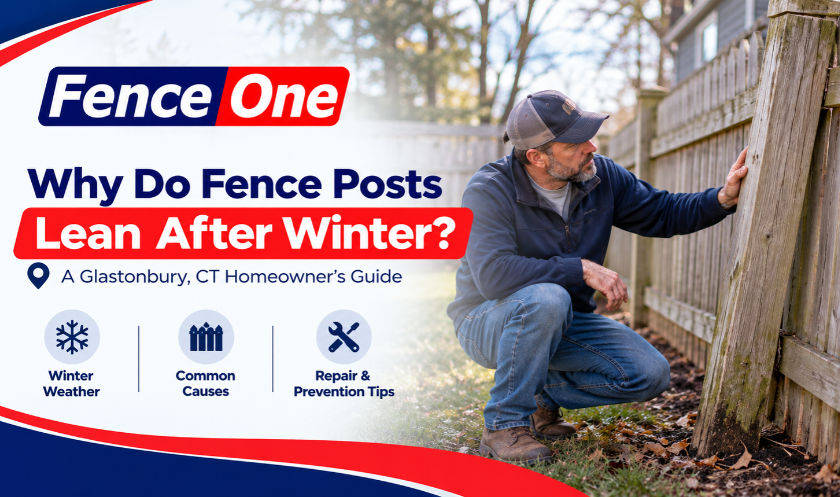
After a long Connecticut winter, homeowners often notice small changes around their property. The lawn may look uneven, garden beds may need attention, and sometimes a fence that stood perfectly straight in the fall starts leaning to one side. For homeowners in Glastonbury, CT, leaning fence posts can be a frustrating problem. What may seem like a minor cosmetic issue can gradually affect the stability of an entire fence.
Winter weather, freezing temperatures, melting snow, and changing soil conditions can all contribute to fence movement. Understanding why this happens can help homeowners recognize early warning signs, prevent further damage, and decide when repairs are necessary.
How Does Winter Weather Affect Fence Posts?
Fence posts depend on the surrounding soil and their foundations to remain stable. During winter, moisture in the ground can freeze and expand, placing pressure on buried posts and their footings. When temperatures rise, the frozen ground begins to thaw. As the soil settles, some posts may shift or lose support. This process is especially noticeable in areas where the ground repeatedly freezes and thaws throughout the season. A fence may look completely normal before winter but begin leaning once spring arrives. The amount of movement depends on soil conditions, drainage, post depth, and installation methods.
What Is Frost Heave, and Why Does It Matter?
Frost heave happens when freezing ground causes soil to expand or move upward. Ice formation within the soil can create enough pressure to shift structures installed in the ground.
Fence posts are particularly vulnerable when their foundations are not properly designed for local freezing conditions. As the ground thaws, the soil may settle unevenly, leaving a post tilted or slightly raised. Homeowners considering Custom fence installation in Glastonbury should understand why appropriate post depth, stable foundations, and local soil conditions matter for long-term fence performance. Proper installation cannot eliminate every weather-related problem, but it can reduce the risk of unnecessary movement.
Can Wet Soil Cause Fence Posts to Lean?
Yes. Excess moisture is another common reason fence posts lose stability after winter.
Melting snow and spring rain can saturate the ground, especially in areas with poor drainage. When soil becomes overly wet, it may provide less support around a fence post. This problem can become more noticeable on sloped properties or in yards where water regularly collects. For example, if rainwater flows toward one section of fencing, the surrounding soil may gradually soften or wash away. Improving drainage and addressing standing water can help protect both the fence and the surrounding landscape.
Does the Fence Material Make a Difference?
Different fencing materials respond differently to weather and ground movement. Wooden posts may develop rot when exposed to prolonged moisture, particularly near ground level. Metal posts can experience corrosion if their protective coating becomes damaged, while vinyl fencing still depends on properly supported posts and foundations.
A leaning fence does not necessarily mean the visible panels are defective. Sometimes the panels remain in good condition while the posts underneath have shifted. Understanding the actual cause is important because replacing panels alone will not correct an unstable foundation.
How Can You Tell if a Leaning Fence Is Getting Worse?
A small amount of movement may not seem urgent, but homeowners should pay attention to changes over time. Look for widening gaps between panels, loose connections, uneven fence lines, or gates that suddenly become difficult to close. You may also notice exposed concrete around a post or soil pulling away from its base. If several posts lean in the same direction, the issue may involve broader soil movement or wind exposure. Checking your fence after snowmelt and heavy rainfall can help you identify problems before additional sections become affected.
Should You Repair or Replace a Leaning Fence Post?
The right solution depends on the condition of the post and the reason it moved.
A structurally sound post with a damaged foundation may sometimes be reset or reinforced. However, a post affected by severe rot, corrosion, or structural damage may need replacement. If multiple posts are unstable, a more extensive repair may be necessary. Simply pushing a leaning post upright without correcting the underlying problem may provide only temporary improvement. A fencing professional can assess the post, surrounding soil, and foundation before recommending an appropriate solution.
Can Leaning Fence Posts Affect Pet Safety?
An unstable fence can create more than an appearance problem, especially for households with dogs.
As posts shift, gaps may develop beneath panels or near gates. These openings can create opportunities for pets to escape. Homeowners researching Pet fence installation near Ellington ct can explore fencing options designed with pet containment and yard safety in mind. Regularly checking fence bottoms, gates, and connections is particularly important after harsh winter weather.
How Can Homeowners Prevent Future Fence Problems?
Prevention begins with proper installation and regular maintenance.
Fence posts should have foundations suited to the local soil, expected loads, and freezing conditions. Keeping water from collecting around posts can also reduce moisture-related damage. Homeowners should inspect fencing after winter, clear debris from fence lines, and address loose hardware or drainage problems early. These simple steps can help extend the useful life of a fence and reduce the likelihood of larger repairs.
Final Thoughts
Leaning fence posts after winter are often connected to frost heave, wet soil, shifting foundations, or deteriorating materials. While the problem may begin with a single post, ignoring it can eventually affect nearby panels and gates. For Glastonbury, CT homeowners, understanding the cause is the first step toward choosing a lasting solution.
Fence One provides residential fencing services for Connecticut homeowners looking to maintain or improve their outdoor spaces. A properly supported fence, combined with seasonal inspections and timely repairs, can help keep your property secure, functional, and attractive throughout the year.